Choosing the right crate starts with one simple thing: accurate measurements. A crate that’s too small can restrict movement and cause discomfort. One that’s too big can feel less like a den and more like a confusing open space, making training harder and travel less secure.
In this guide, I’ll walk you through a step-by-step process to measure your dog for their crate—ensuring it’s just right for safety, comfort, and confidence.
Preparing to Measure
Before we get started, it helps to gather a few essentials. Measuring a dog—especially a wiggly puppy or high-energy breed—can be a two-person job. Set yourself up for success with these tools:
-
A soft tape measure (or fabric measuring tape)
-
A helper (especially for larger or less cooperative dogs)
-
Pen and paper (or your phone) to record the numbers
-
Treats to keep your dog calm and happy
-
A quiet, familiar space where your dog feels secure
Patience is key here. If your dog isn’t used to being measured, take your time. A few treats and a calm tone can make it a positive experience.
Measuring Your Dog’s Height
Crate height is just as important as length. It ensures your dog can comfortably sit, stand, and stretch without crouching. To get this right, have your dog stand in a natural, relaxed posture—no slouching or stretching.
Measure from the ground (your dog’s front paw) to the top of their shoulder blades (withers). This gives you the most consistent and crate-relevant height.
Here are a few common mistakes to avoid when measuring height:
-
Measuring to the top of the head instead of the shoulders
-
Taking measurements while your dog is sitting or lying down
-
Using a rigid ruler that makes dogs uneasy
-
Skipping the helper (which can lead to inaccurate numbers)
If your dog is tall or lanky—like a Great Dane or Doberman—you’ll want to double-check for accuracy. For puppies, consider their adult height if they’re still growing.
Measuring Your Dog’s Length
Now it’s time to measure your dog’s length, which determines how much room they’ll have to lie down comfortably. Have them stand again in a natural posture.
Measure from the tip of the nose to the base of the tail—not the tip. You want the length of the body, not including the tail’s full extension.
If your dog has a long snout (like a Greyhound) or a tightly curled tail (like a Shiba Inu), here’s what to keep in mind:
-
Long muzzles don’t need to be fully included in crate length, but give a little extra room if your dog stretches out
-
Curled tails should not be included—just measure to where the tail meets the back
Make sure you jot this down alongside your dog’s height.
Accounting for Extra Room
Once you’ve got both height and length, it’s time to factor in clearance space. Dogs should be able to stand up, turn around, and lie down with ease. That means your final crate size should include a few inches of buffer.
Add about 2 to 4 inches to both height and length measurements. This ensures your dog has enough space without the crate becoming oversized.
Here’s why that extra space matters:
-
Turning around without bumping into the sides
-
Fully lying on their side or stretching out
-
Standing up without crouching or hitting their head
-
Making the crate feel like a cozy den, not a cage
For growing puppies, we often recommend sizing up with a divider panel so the crate grows with them.
Selecting the Right Crate Model
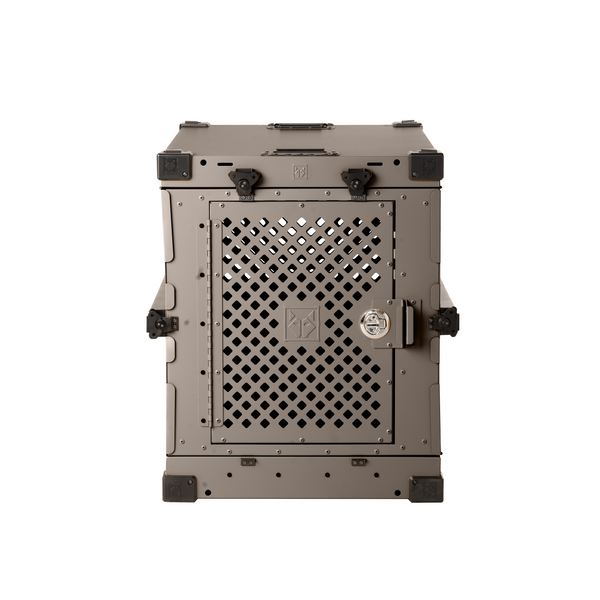
Now that you have your measurements (plus a little wiggle room), it’s time to match your dog to the right crate. At Impact Dog Crates, we’ve designed several models that serve different needs—whether your dog is a calm traveler or a high-anxiety pup needing extra security.
Here’s a quick overview of which Impact crates suit which scenarios:
-
Collapsible Crate: Great for travel and daily use; ideal if you need flexibility or want to save space.
-
Stationary Crate: Durable, stackable, and built for secure everyday use—perfect for home or transport setups.
-
High Anxiety Crate: For dogs with escape tendencies or severe anxiety—reinforced and vet-recommended.
If you’re unsure which size or model is best, try our Find My Crate Quiz. It’s a quick, guided way to match your dog’s measurements and behavior with the right fit.
Final Thoughts
Measuring your dog might seem like a small step—but it’s the foundation for crate success. With just a few tools and a calm approach, you can find dimensions that ensure your dog’s crate is a place they feel secure and comfortable in.
To recap:
-
Gather your tools and prepare your space.
-
Measure your dog’s height to the shoulders and length to the base of the tail.
-
Add 2–4 inches for comfort and use those dimensions to choose your crate.
We’re here to help every step of the way—whether that’s browsing our crate size chart, reading our blog guides, or using our crate quiz to make sizing easy.
Your dog deserves a crate that fits just right—and we’re proud to help you find it.