


Behavioral study · Fi × Impact
For dogs with elevated anxiety, the data moved in seven weeks.
Across 349 dogs in our behavioral study with Fi, three anxiety indicators declined substantially over the first seven weeks of crate adoption. Here's exactly what was observed — and what it takes.
 Data by Fi Dogs →
What we measured
349 high-anxiety dogs
From 571 enrolled, 349 met the analysis threshold of 10+ barking events per day at baseline. Working and herding breeds, median age 1.8 years.
On-collar AI, continuous
Fi smart collars classified barking, scratching, and licking by event count and duration. Minutes per day was the primary metric — captured continuously, not self-reported.
7 weeks · 91% retained
Behavioral signals aggregated weekly across the first seven weeks of crate adoption. 349 → 316 dogs (9.5% attrition), indicating consistent wear.
Seven weeks of decline
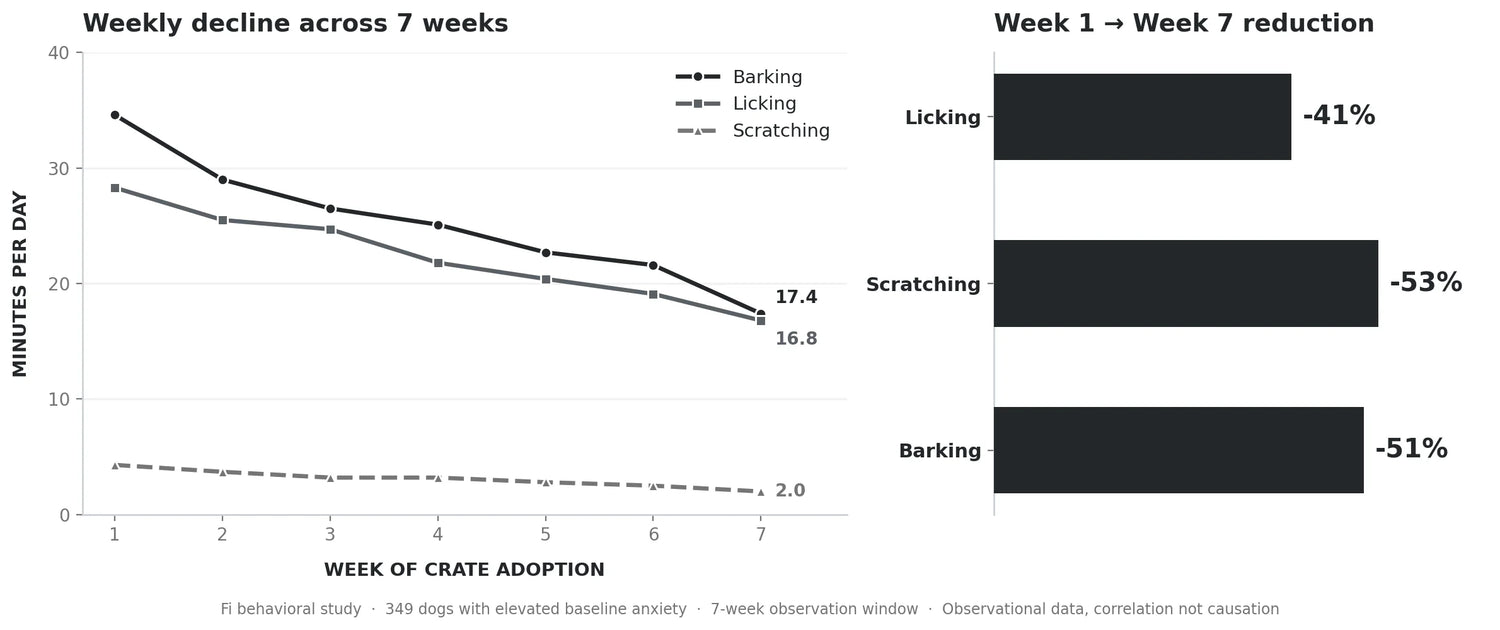
Weekly minutes/day declined across all three indicators over the 7-week window. Right panel: total Week 1 → Week 7 reduction.
Week by week
| Week | Barking (min/day) | Scratching (min/day) | Licking (min/day) | Dogs in cohort |
|---|---|---|---|---|
| 1 | 34.6 | 4.3 | 28.3 | 349 |
| 2 | 29.0 | 3.7 | 25.5 | 333 |
| 3 | 26.5 | 3.2 | 24.7 | 325 |
| 4 | 25.1 | 3.2 | 21.8 | 324 |
| 5 | 22.7 | 2.8 | 20.4 | 334 |
| 6 | 21.6 | 2.5 | 19.1 | 324 |
| 7 | 17.4 | 2.0 | 16.8 | 316 |
| Δ | -51% | -53% | -41% | 9.5% attrition |
56% of enrolled dogs
The cohort looks like your dog
180 breeds enrolled. The top ten map almost exactly to Impact's core customer: high-energy working and herding breeds.
What this means for your dog
Results are training-dependent. A crate alone doesn't solve anxiety — it gives you the tool to do the work. The decline above happened because owners put in consistent effort over seven weeks.
The crate is the tool. The training is the work. The data shows it pays off.
Paraphrasing Fi's own guidance: improvement takes consistent effort from the owner — it isn't automatic.

About this study
Observational study conducted by Fi using smart-collar behavioral data. The reductions shown describe the high-anxiety analysis cohort (349 dogs with elevated baseline signals), not all dogs or all customers. This is a correlation observed among dogs whose owners use Impact crates — not a demonstration that the crate alone caused the change. Individual results vary; the cohort skewed young (median 1.8 years).
Get the best for you your dog
Frequently Asked
Common questions.
We do — but only for one model. Our High Anxiety Crate is the only model covered by our Lifetime Dog Damage Guarantee. If your dog damages it, we'll replace it — no questions asked. This guarantee does not apply to our Stationary or Collapsible Crate models. However, every Impact crate comes with a Lifetime Warranty, regardless of model.
Yes. Every Impact crate comes with a Lifetime Warranty covering defects in materials and workmanship for the life of the crate.
Our Airline Crate is designed to meet airline requirements. It features tie-down points, butterfly latches, and padlock-ready holes for secure travel.
Use our Sizing Genius tool on any product page — enter your dog's breed and we'll recommend the right size. You can also measure your dog and compare to our size charts.
Yes! We offer a rental program on select models. Rent for as low as $25/mo and apply your rental payments toward a purchase if you decide to buy.